What Is an Appreciation Certificate and How Do UAE Companies Use It?
Someone in your office just finished a project on time, trained three new hires without complaint, or has quietly hit their sales number for six months straight. A “thank you” in a team chat covers it for a day. It doesn’t hold up much longer than that.
This is exactly where an appreciation certificate does its job. It’s not a big gesture, and it doesn’t need to be. Most UAE offices already use one for exactly this reason: it’s specific, it’s on record, and it doesn’t feel like a formality thrown together at the last minute. The rest comes down to getting a few details right.
What An Appreciation Certificate Actually Is
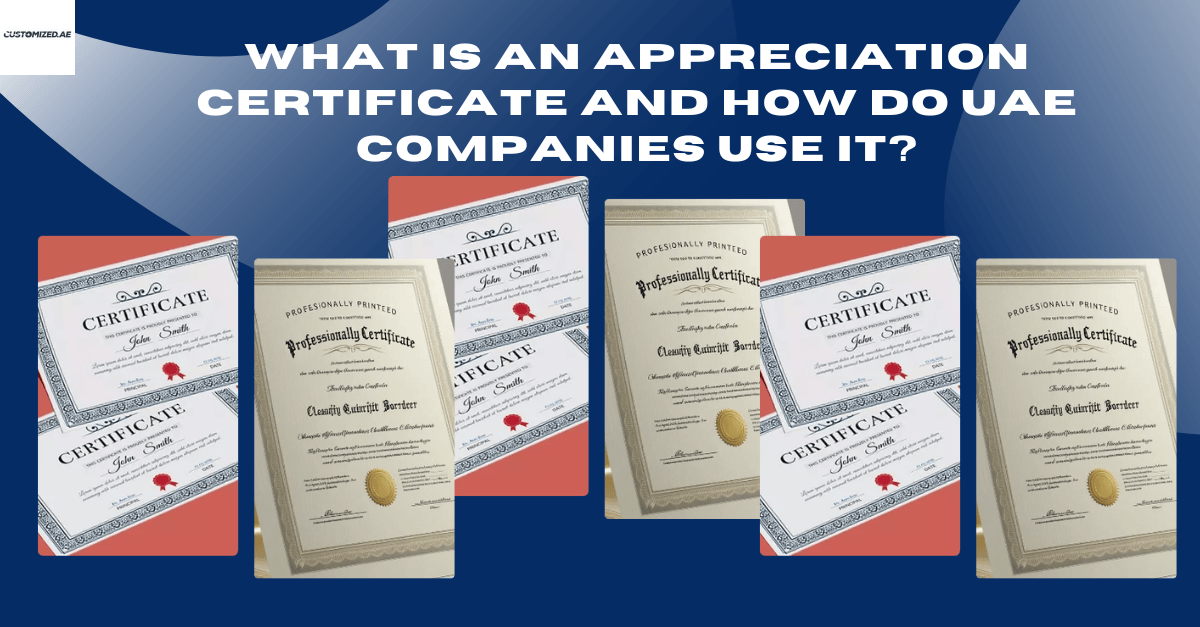
An appreciation certificate is a document, printed or digital, that puts something specific on record: someone hit a target, finished a project, stayed with the company for five years, or helped a new hire settle in without anyone having to ask twice. It names the person, the reason, and usually a date and signature. That’s the whole function. It’s a record, not a decoration.
It’s easy to mix this up with two other things offices hand out. A certificate of completion is different from one that confirms someone finished a training or course, not that they did something well. A trophy or plaque is different too. It’s a physical object meant to sit on a desk, while a certificate is meant to be read. An appreciation certificate sits between the two: it’s about performance or effort, and it’s written down so it can’t be forgotten by next quarter.
Why Do UAE Companies Use Appreciation Certificates So Often?
Offices here run on teams from a dozen different backgrounds, ranks, and native languages. A certificate skips that gap entirely. It’s a written, official-looking document that means the same thing whether the person reading it is a new hire or a department head. It doesn’t rely on tone of voice or translation to land.
When they show up most
They tend to cluster around specific points in the year: Ramadan and Eid closings, National Day, year-end reviews, and the sign-off of a project. These are moments HR teams already have marked on a calendar, so a certificate becomes an easy, low-cost way to acknowledge something without organizing a full event around it.
What they cover day to day
Outside of those dates, certificates get used for smaller, individual moments too:
- Completing onboarding without issues
- Marking a work anniversary
- Closing out a project on schedule
- A farewell on someone’s last day
- Hitting a sales or performance target
None of these needs a gift or a ceremony. A certificate sits in that middle space more than a message in a group chat, less than an actual reward.
What Makes A Certificate Worth Keeping?
Most certificates end up in a drawer within a month. A few stay pinned up for years. The difference usually comes down to five small details, not the overall design.
Get the name right
This sounds obvious, but it’s the single biggest complaint HR teams hear: a misspelled name undoes the entire gesture, no matter how good the rest of it looks.
Name the actual reason
“For outstanding contribution” says nothing. “For leading the Q3 client onboarding without a single delay” says everything. Specific wording is what makes someone actually read it twice.
Add a date and a signature
A certificate without a date feels generic, and one without a signing authority, such as a manager or CEO, feels unofficial, like it was generated and forgotten.
Keep the logo and seal clean
A company logo and a simple border or seal signal that this came from the company, not a template someone downloaded in five minutes.
And a lot of this comes down to the print itself. Good appreciation certificate printing, the right paper weight, a matte or gloss finish, foil-stamping if the budget allows, is what separates something that looks intentional from a certificate on flimsy A4 that undercuts the wording no matter how well it’s written.
Digital Or Printed Certificate — Which One Should You Pick?
It depends on what the moment is worth.
| Digital (PDF/email) | Printed (framed/rolled) | |
| Best for | Quick shoutouts, remote teams | Milestones, anniversaries, farewells |
| Speed | Instant | Needs 2-3 working days |
| Where it ends up | Inbox, maybe printed later | Desk, wall, taken home |
A PDF works fine for a fast internal shoutout or a remote employee who won’t see a physical copy anyway. But for anything bigger, a 5 or 10-year anniversary, a retirement, top performer of the year, a printed one is what actually gets displayed. One thing worth planning around: proper cardstock or a textured finish isn’t a same-day job, so most UAE print shops need 2-3 working days to get it right.
Only A Certificate Or A Gift As Well?
For milestone moments
A work anniversary, a retirement, or a top performer of the year usually calls for more than paper alone. Companies pair the certificate with something small, a pen, a mug, a desk plaque, not because the item is expensive, but because it makes the moment feel like it was actually planned for, not printed the same morning. This is generally where promotional corporate gifts come in, chosen to match the occasion rather than a fixed budget line.
For everyday recognition
A monthly shoutout or a task closed on schedule doesn’t need the same treatment. The certificate on its own already says what needs to be said. Pairing it with a gift every time it happens turns a meaningful gesture into a routine one, and routine is exactly what a certificate is meant to stand apart from.
A simple way to decide
If the occasion is one people will remember a year from now, add something to it. If it’s one of several this quarter, the certificate carries the weight on its own.
Common Mistakes Companies Make With These
A few habits quietly undo the whole gesture, and most of them are easy to avoid once you know to look for them.
- Generic wording: Phrases like “for outstanding contribution” could apply to anyone on the team. It reads as filler, not recognition.
- Misspelled names: Still the single most common complaint HR teams hear, and the fastest way to make the whole certificate feel careless.
- Handing them out too often: When every small task gets a certificate, none of them mean much by the third or fourth one.
- Skipping the signature or seal: Without it, the certificate looks unofficial, like something generated in a hurry rather than approved by someone.
- Poor print quality: Thin paper that curls or ink that fades within weeks tells the recipient the gesture wasn’t worth much effort either.
None of these is hard to fix. They just need someone to actually check before it’s handed over, not after.
FAQs
1) What is an appreciation certificate used for in a company?
It’s used to formally record that someone did something worth noting, hit a target, finished a project, or reached a work milestone with a name, reason, and date attached to it.
2) How is it different from a certificate of completion?
A certificate of completion confirms that someone finished a training or course. An appreciation certificate recognizes performance or effort, not attendance.
3) Should a certificate be digital or printed?
Digital works fine for quick internal shoutouts or remote teams. Printed ones matter more for milestones, anniversaries, retirements, and top performer awards since they get displayed rather than filed away.
4) Does a certificate always need a gift with it?
No. Bigger milestones often get paired with a small item, but routine recognition, like a monthly shoutout or a task closed on time, doesn’t need one every time.
5)What’s the most common mistake companies make with these?
Misspelling the recipient’s name. It’s the single most frequent complaint HR teams hear, and it undercuts the entire gesture regardless of the wording used.
A Quick Way To Decide If You Need One
Not every good week needs a certificate, and trying to mark all of them ends up working against you. A simple check: if it’s something you’d bring up in a team meeting, or something the person might mention to a friend or post on LinkedIn later, it’s worth the paper. If it’s a routine, a normal week, a task done on time like any other, a message covers it just as well.
This one question does most of the work. Skip it, and companies end up either printing certificates for things nobody remembers a month later, or holding back recognition until it feels overdue. Either way costs more than getting this right the first time, a five-minute decision, made before the certificate is even ordered.

I am Yousuf Ali, a top-rated corporate gifts supplier in Dubai at Customized AE. I write about customized gifts, branding ideas, and smart corporate gifting tips. With my industry experience, I share simple advice to help businesses choose the right gifts and build a strong brand image.