
7 Best Ways to Print A Picture on Mug for Gifts and Branding
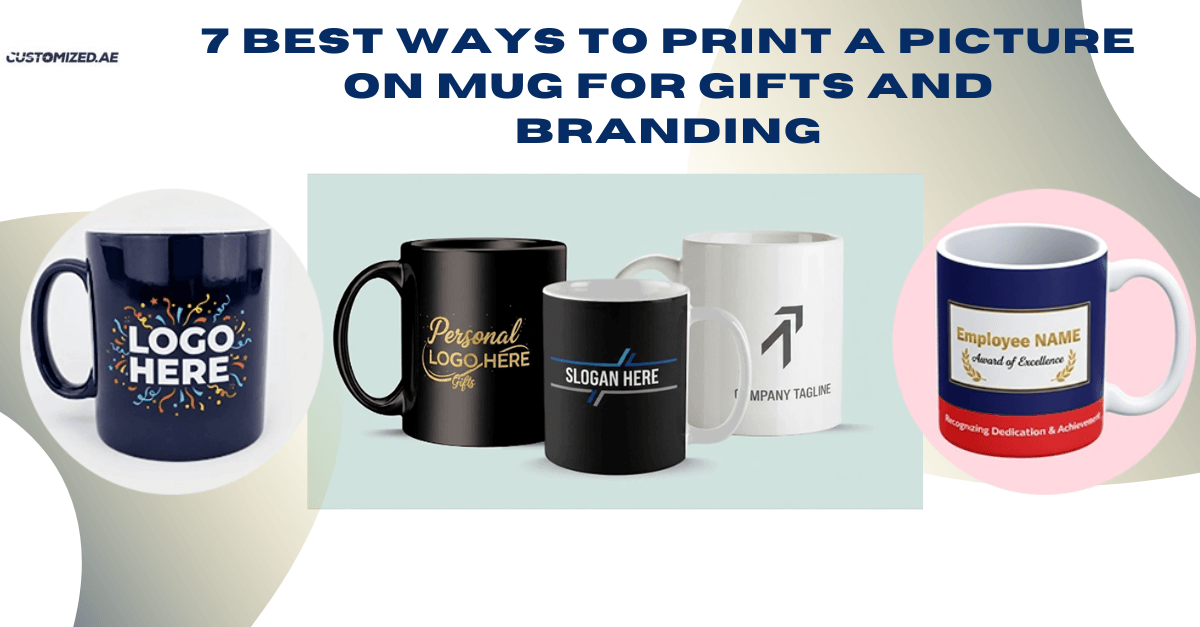
Someone orders a custom mug and it arrives looking faded, pixelated, or nothing like what they imagined. Not because the printer was bad, but because the wrong method was used for that specific job.
That’s the part nobody talks about. Mug printing isn’t one-size-fits-all. The technique that makes a family photo look stunning on a ceramic birthday mug has no business being used on a steel tumbler for a client gift. And if you’re ordering in bulk for a brand? It is a different game entirely.
Before you place an order or hand a file to a printer, it helps to know what each method actually does, and more importantly, what it’s built for.
Here are 7 ways to print a picture on a mug, broken down by what works, what doesn’t, and which one fits your situation.
Which Method Is Right for You To Print Pictures On Mugs?
Not every method works on every mug. Some need a specific coating. Some are built for bulk. Some shine on ceramic but fail completely on steel. The seven methods below cover the full range, from a single birthday gift to a 500-piece branded order. Find the one that matches what you’re actually trying to do.
1. Dye Sublimation Printing
Heat and special ink fuse the image directly into the mug’s coating. It doesn’t sit on top, it becomes part of the surface. That’s why it survives hundreds of washes without fading or peeling. For anything involving a real photo, this is the method that does it justice. It’s become the standard choice for photo mug printing because the output quality simply holds where basic transfer methods fall short.
One limitation: it only works on white or light-colored polymer-coated mugs. Dark mugs will kill the colors.
Best for: Birthday gifts, family photos, memory keepsakes, personal orders.
2. UV Direct Printing
Sublimation stops working the moment you move to a dark or colored mug. UV printing doesn’t have that problem.
UV-curable ink is printed straight onto the mug surface, no transfer paper, no heat press, no special coating required. It works on ceramic, glass, and steel equally well, and handles multi-color logos with clean, sharp edges. There’s also one thing UV printing does that no other method can a raised, textured ink effect that actually sits on the surface and feels dimensional.
For short-run branded orders or custom one-offs on non-white mugs, this is the practical choice.
Best for: Colored and dark mugs, brand logos, mixed-material drinkware, and one-off custom orders.
3. Heat Transfer Printing
Think of this as the practical middle ground. A design gets printed onto transfer paper, then pressed onto the mug with heat. Simple process, low setup cost, and it works on curved surfaces without much hassle.
It’s not as permanent as sublimation with heavy use because edges can lift over time. It also isn’t the best choice for detailed photography or fine gradients. Where it works well is bold graphics, typography, and simple designs that don’t need pixel-perfect precision.
For small-batch wedding favors, quote mugs, and last-minute gifts, it gets the job done without requiring professional equipment or a big budget.
Best for: small-batch gifts, quote mugs, wedding favors, and simple graphic designs.
4. Laser Engraving
No ink or color is used. The material of the product is itself marked permanently by a laser beam.
That might sound minimal, but the end result is not. Laser engraving produces a clean, precise finish that doesn’t fade, chip, or wear down with daily use. There is no coating to scratch off or no color to dull. You get a sharp etched design that looks as good in year three as it did on day one.
This is the method that changed premium drinkware. If you’ve ever received a customized Stanley cup with a company logo etched clean into the steel, laser engraving is almost certainly how it was done. It’s become the standard for high-end branded drinkware because it matches the quality of the product itself.
Works best on stainless steel and metal surfaces. Not suitable for full-color photo designs.
Best for: Executive gifts, premium steel tumblers, and high-end branded drinkware.
5. Screen Printing
Screen printing is old. It’s also still one of the most cost-effective methods when the order is large and the design is simple.
Ink gets pushed through a mesh stencil directly onto the mug, one color per pass. That limitation matters. Gradients, photos, and multi-color artwork don’t translate well here. But a clean single-color logo on 200 mugs? Screen printing handles that efficiently and at a lower per-unit cost than most other methods.
Where it falls apart is in small runs. The setup cost per screen makes low-quantity orders expensive fast. This method only makes financial sense when the numbers are there.
Best for: Bulk trade show giveaways, promotional merchandise, single-color logo orders at scale.
6. Ceramic Decal / Litho Printing
Most people have used a mug printed this way without ever knowing it. That hotel room mug. The one from a conference welcome kit. The branded cup sitting on someone’s office desk is most likely created through ceramic decal printing.
The process involves printing a design onto a special film, applying it to the mug, then firing it in a kiln. The heat permanently fuses the design into the ceramic glaze itself. The result is a scratch-resistant, dishwasher-safe, and built-to-last product that won’t have its colors shift over the years.
Ceramic decal printing is quietly the backbone of most corporate gifting items that involve mugs. It is how brands produce hundreds of identical, high-quality pieces that still look sharp after two years of daily office use.
Where it makes sense:
- High-volume branded orders
- Hospitality and hotel merchandise
- Corporate welcome kits and employee gifting programs
Best for: Large branded orders, hospitality, corporate merchandise at scale.
7. Print-on-Demand Services
There is no minimum order limit. You won’t need any equipment and there will be no direct dealing with the printer as well. You just have to contact Customized.ae , upload a design, place an order, and it ships straight to you or whoever you’re gifting.
For a one-off birthday mug or a small business testing a design before committing to bulk, this is the most practical route. It removes every logistical barrier and works from anywhere.
One important thing to keep in mind is that quality varies significantly between platforms. Resolution, coating type, and print method all differ from one provider to the next. Before ordering anything important, check sample reviews and product specs. A mug for your mum and a mug for a client pitch deserve different levels of scrutiny.
Best for: One-off personal gifts, design testing, small businesses, or gifters without local printing access.
Frequently Asked Questions
What is the best method for printing a photo on a mug?
Dye sublimation is the best method for photo mug printing. It produces full-color, photo-realistic results that are permanently fused into the surface and hold up wash after wash without fading or peeling.
Can you engrave a design on a Stanley Cup?
Yes. Laser engraving is the most common method used on stainless steel drinkware, including Stanley cups. It etches the design directly into the steel surface with no ink, making it permanent and dishwasher-safe.
What type of mug printing works best for corporate orders?
For large branded orders, ceramic decals and screen printing are the most practical choices. Ceramic decals deliver premium, long-lasting quality, while screen printing keeps costs low on high-volume, simple logo runs. Both are widely used for corporate gifting and promotional merchandise.
Final Thoughts
The right method comes down to three things: the mug material, your order quantity, and what the design actually looks like. Get those three right and the rest falls into place.
Whether it’s a single-photo gift or a branded order for your whole team, there’s a method built exactly for that task. Now you know which one to reach for.

I am Yousuf Ali, a top-rated corporate gifts supplier in Dubai at Customized AE. I write about customized gifts, branding ideas, and smart corporate gifting tips. With my industry experience, I share simple advice to help businesses choose the right gifts and build a strong brand image.