A5 Notebooks for Employees: Features, Uses, and Benefits
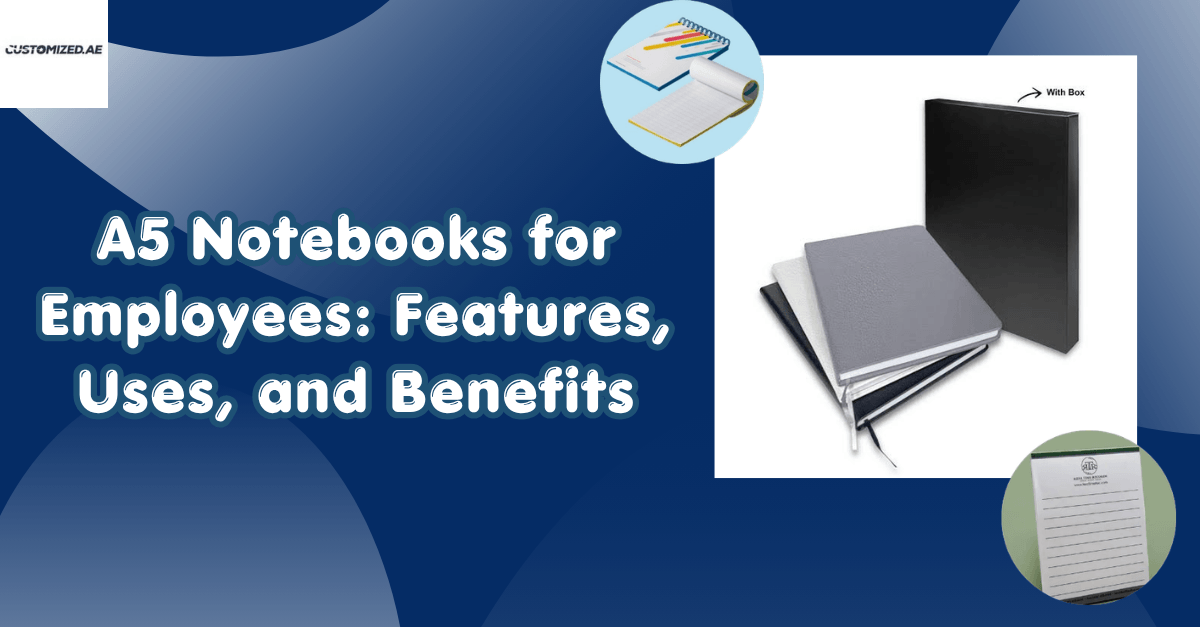
Every office supply cabinet still has a stack of A5 notebooks, even with laptops, tablets, and note-taking apps on every desk. The size sits right between a pocket diary and a full A4 pad, which is exactly why it works for meetings, quick task lists, and project notes that need to stay on paper rather than buried in another app tab.
Companies that hand out or stock A5 notebooks for staff aren’t doing it out of habit. The format holds up across different work styles, from someone who jots three lines in a meeting to someone who fills a full page planning a project. That range is what keeps it in regular use.
A5 Notebooks Fit Both Desk and Bag
Most office notebooks fail on one of two counts: too bulky for a bag, or too small to write a full note. A5 sits in the middle, which is why it shows up on desks and in bags without anyone thinking twice about the size.
Standard Dimensions
An A5 notebook measures 148 x 210mm, roughly half the size of an A4 pad. It slides into a laptop sleeve, a tote’s side pocket, or a desk drawer without eating up space meant for other files.
Binding Options
- Spiral-bound; folds flat or 360°, useful for quick note-taking in meetings
- Hardcover; holds up to daily commute wear and stacking
- Softcover; lighter weight, easier to carry alongside a laptop
Paper Types
Lined pages suit straightforward note-taking. Dot grid works for sketching layouts or light bullet journaling. Grid paper helps with tables or rough diagrams. Most office notebooks use 70-80gsm paper, thick enough to stop ink bleeding through to the next page.
The size itself is the main reason this format sticks around a desk. It’s large enough to write a full page of notes, but small enough to carry between a desk, a meeting room, and a commute without needing a bag built around it.
Handwritten Notes Improve Memory Retention
Typing captures more words per minute, but it doesn’t process information the same way. Employees who write meeting notes by hand tend to remember decisions and action items without needing to scroll back through a doc later.
Why Handwriting Sticks
Writing by hand forces the brain to summarize instead of transcribe. An employee typing notes often copies word-for-word, while someone writing by hand naturally shortens ideas into a few words, which is closer to how memory actually stores information.
Fewer Screen Distractions
- No notification pop-ups mid-note
- No open tabs pulling focus away from the meeting
- No auto-save syncing issues losing half a page
A notebook doesn’t compete for attention the way a laptop screen does. That’s a small thing in a single meeting, but it adds up across a full week of back-to-back calls.
Consistent Branding at Scale
Companies that hand out notebooks across a full team don’t order them one at a time. Most work with a customized notebook supplier to keep paper quality, cover finish, and logo placement consistent across a bulk order, rather than reordering from different vendors each time stock runs low.
Where Employees Use A5 Notebooks Daily
Most notebooks don’t sit in a drawer once they’re handed out. They move between meeting rooms, desks, and onboarding folders, covering a few specific jobs across the week rather than one single use.
Meeting Minutes
A5 fits a conference table without taking over the space the way an A4 pad does. One page usually covers a 30-minute meeting’s key points and next steps.
Daily Task Lists
Employees use a fresh page each morning to list the day’s priorities, which keeps small tasks from getting lost between emails and Slack messages.
Project Logs
Ongoing projects get their own dated entries, so notes from a planning session in week one are still easy to find by week four.
Onboarding Kits
New hires often get an A5 notebook as part of their first-week kit, usually the first branded item they use daily, before company swag or a laptop sticker ever gets noticed.
Notebooks Work Well as Corporate Gifts
A branded mug sits on a shelf after a few uses. A branded notebook gets carried to meetings and filled up page by page, which puts the logo in front of the employee or client every single day instead of once.
Daily Use Over Shelf Life
That everyday use is exactly why notebooks outperform most other giveaway items. A pen runs out of ink, a keychain gets swapped for another one, but a notebook stays in rotation until every page is filled.
Onboarding and Client Gifting
New employees get one as part of their welcome kit, and clients often receive one at the end of a meeting or event. Both cases work the same way. The item stays useful long after the interaction that handed it over.
Sourcing for Bulk Orders
Businesses looking for a custom-printed corporate gift dubai tend to pick notebooks first for this reason. They’re practical enough to get used daily, and the branding stays visible without feeling like an advertisement.
Check These Before a Bulk Order
Bulk notebook orders go wrong in predictable ways, usually because a spec got skipped early on. A short checklist upfront saves a reorder later.
Paper Weight
Anything below 70gsm tends to let ink bleed through, especially with fountain pens or markers. 80gsm is the safer standard for office use.
Binding Durability
Spiral binding holds up well for notebooks used flat on a desk. Hardcover suits notebooks that get tossed in a bag daily.
Minimum Order Quantities
Most suppliers set MOQs between 50 and 100 units for custom branding. Smaller orders often cost more per unit.
Production Turnaround
Custom print runs usually take 2 to 4 weeks. Onboarding kits or event deadlines need this factored in early, not after the order is placed.
Branding Method
Screen printing works for single-color logos on a budget. Debossing gives a more premium finish but costs more per unit and takes longer to produce.
A5 Notebooks vs. Digital Note Apps
Neither one replaces the other completely. Most people end up using both, depending on what the task actually needs.
| Task | A5 Notebook | Digital App |
| Quick meeting notes | Faster to jot down | Slower, needs unlocking device |
| Searching old notes | Manual flip-through | Instant keyword search |
| Sharing with a team | Needs photo or retyping | Syncs and shares instantly |
| Sketching or diagrams | Easier freehand | Limited without a stylus |
| Long-term memory | Better retention | Easy to forget once closed |
A meeting note gets written faster by hand. A note that needs sharing across a team works better typed. The task decides which one makes sense, not personal preference alone.
FAQs
1- What is an A5 notebook used for?
A5 notebooks are used for meeting notes, daily task lists, project planning, and journaling. The 148 x 210mm size gives enough space for full notes while staying easy to carry in a bag or laptop sleeve.
2- What are the advantages of a notebook?
Writing by hand improves memory retention compared to typing, since it forces the brain to summarize instead of transcribe. Notebooks also offer a distraction-free space, with no notifications or app switching to break focus.
3- How many pages does an A5 notebook have?
Most A5 notebooks have 160 to 192 pages (80 to 96 sheets). Lightweight softcover or wirebound options usually sit at 160 pages, while hardcover notebooks often run closer to 192.
4- What are the differences between an A4 and an A5 notebook?
An A5 notebook is exactly half the size of an A4 sheet, at 148 x 210mm versus 210 x 297mm. A4 works better as a desk-bound notebook for extensive notes, while A5 is built for daily carry and portability.
5- How do I choose the right A5 notebook?
Match the paper weight, binding, and cover to how it’ll be used. 80-100gsm paper handles most pens without bleed-through, spiral binding suits desk use, and hardcover holds up better for daily commuting.
Final Thought
A5 notebooks stay useful in an office for a simple reason: they cover meetings, task lists, and project notes without needing a charger or an app to open. The size fits a desk, a bag, and a conference table equally well, which is why the format hasn’t been replaced by digital tools, just used alongside them.
For teams ordering in bulk, the details that matter are the same ones covered above: paper weight, binding, and turnaround time. Getting those right the first time means the notebooks actually get used, not just handed out and forgotten in a drawer.

I am Yousuf Ali, a top-rated corporate gifts supplier in Dubai at Customized AE. I write about customized gifts, branding ideas, and smart corporate gifting tips. With my industry experience, I share simple advice to help businesses choose the right gifts and build a strong brand image.